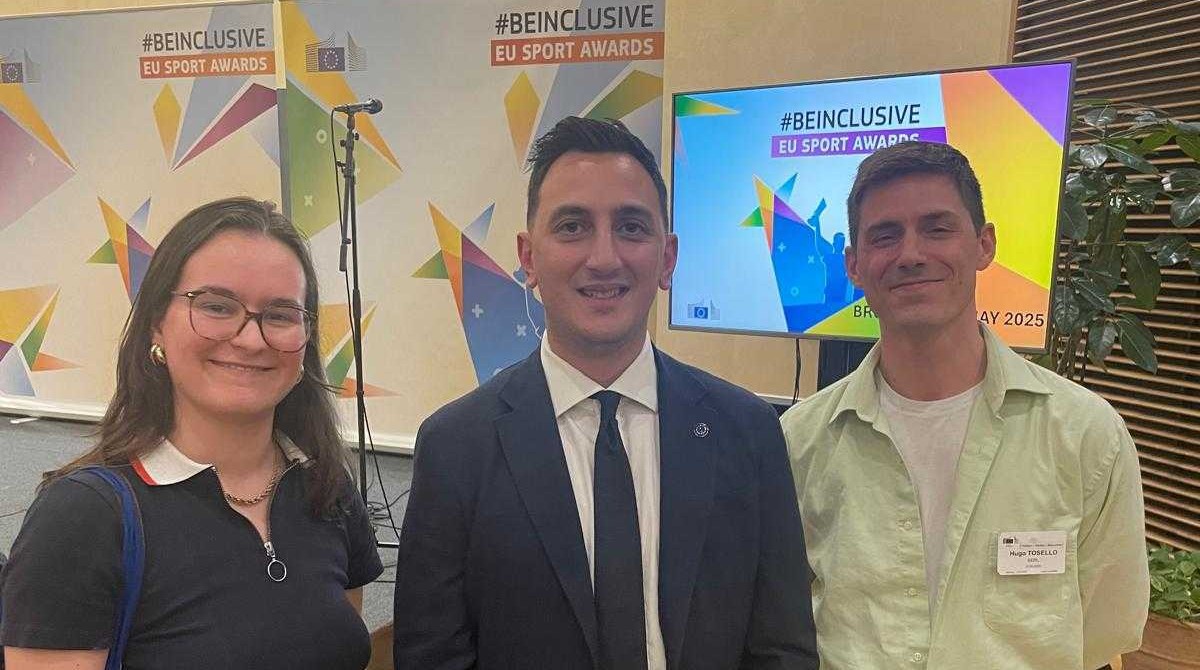
Interview with Glenn Micallef, European Commissioner for Intergenerational Fairness, Youth, Culture and Sport: NBA Europe, Russian athletes and the European sports model
Following Commissioner Micallef’s interview with L’Equipe on Wednesday 11 November, Sport and Citizenship welcomes the clarity of his positions on three key issues for the future of sport in Europe: the NBA Europe project, the participation of Russian athletes and the Commission’s forthcoming communication on the European sports model.
NBA Europe: investment should go hand in hand with solidarity
Whilst the Commissioner is not fundamentally opposed to the NBA Europe project, he highlights the dynamism of European basketball and the need to make it attractive to investors in order to ensure it receives sufficient funding.
Sport and Citizenship shares this position and welcomes the points raised by the Commissioner. We are not fundamentally opposed to private leagues, but they must develop in accordance with the principle of solidarity. If they help to attract more investment that trickles down to the most local level, this is a positive development. Sport et Citoyenneté, however, emphasises, as does the Commissioner, the need to respect competition law and the principles of solidarity.
Russian athletes: protecting athletes without compromising the values of sport
The Commissioner condemns the use of sport as a propaganda tool, rejecting state symbols, whilst advocating for athletes to compete under a neutral flag.
Sport and Citizenship fully supports this fight against the exploitation of sport, as well as the right of athletes to compete without being unfairly penalised for the actions of their government. We remain convinced, however, that such participation must be accompanied by a thorough vetting process. This would involve examining, on a case-by-case basis, each athlete’s position and their potential involvement in the conflict, in order to ensure that they are not spreading any propaganda and have not taken part in it directly.
This requirement must not amount to a double standard but must apply to all conflicts. Finally, the governing bodies of sport have a responsibility to uphold the values of peace upon which they were founded, and cannot shirk this responsibility.
The European sports model: a much-anticipated communication
The Commissioner showed pride in the European sports model, which he considers to be the best in the world. Fully aware of the benefits of sport, he wishes to build on existing initiatives to strengthen them and introduce new funding mechanisms.
Sport and Citizenship eagerly awaits the Commission’s communication and fully endorses the Commissioner’s analysis. The strength of this model lies, above all, in its alignment with our European social vision, which is truly unique to our continent. We welcome the announcement of funding for initiatives that embody this vision of sport rooted in society and in tune with its evolving needs.
Nevertheless, there is still a long way to go before sport is truly taken seriously and integrated into all aspects of public policy. We hope that the Commission’s communication will contribute to this recognition and establish a link with the CCS.