“How to make sports truly LGBTQIA+ friendly in the Wallonia-Brussels Federation” — A Look Back at the BGS × Sport and Citizenship Conference
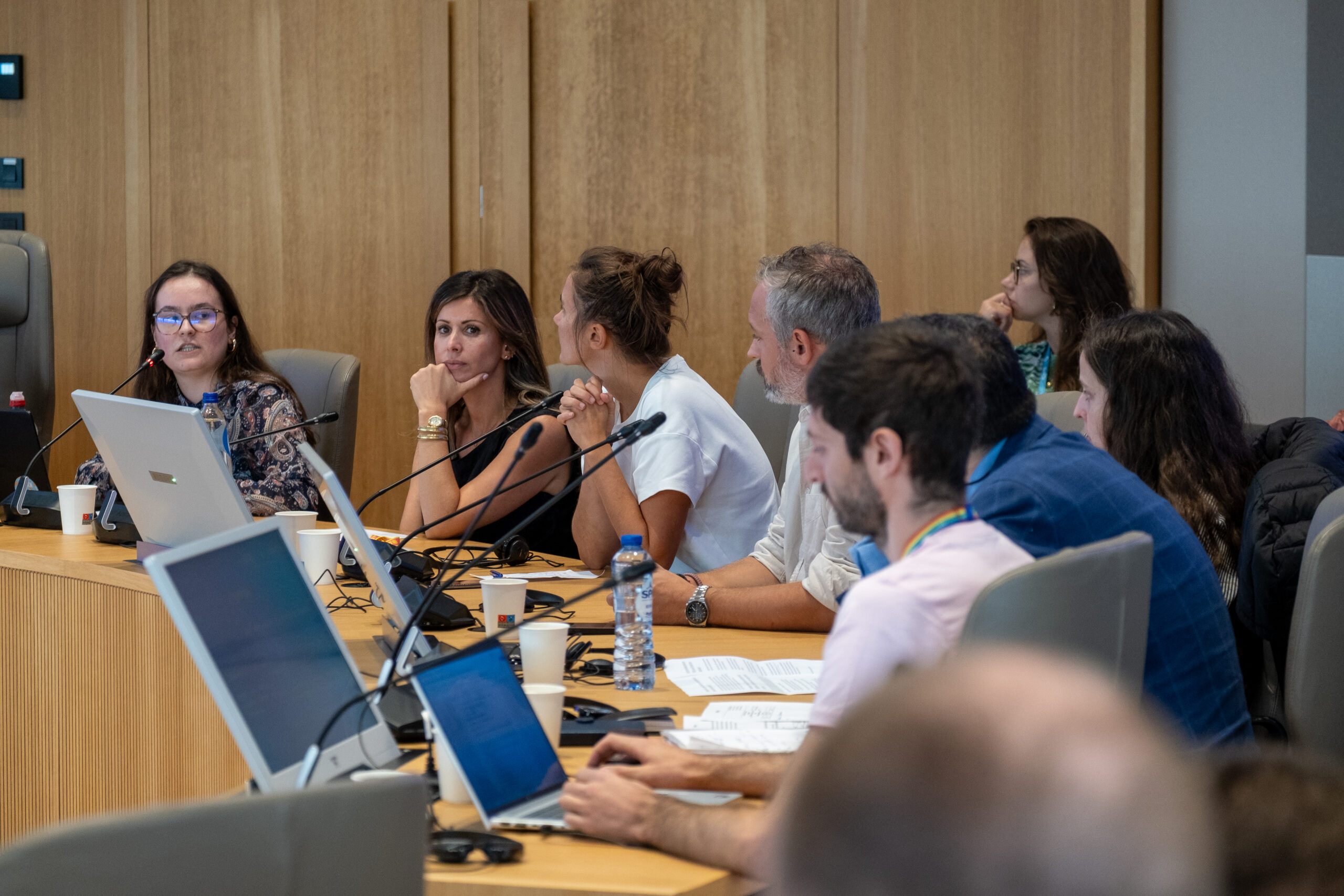
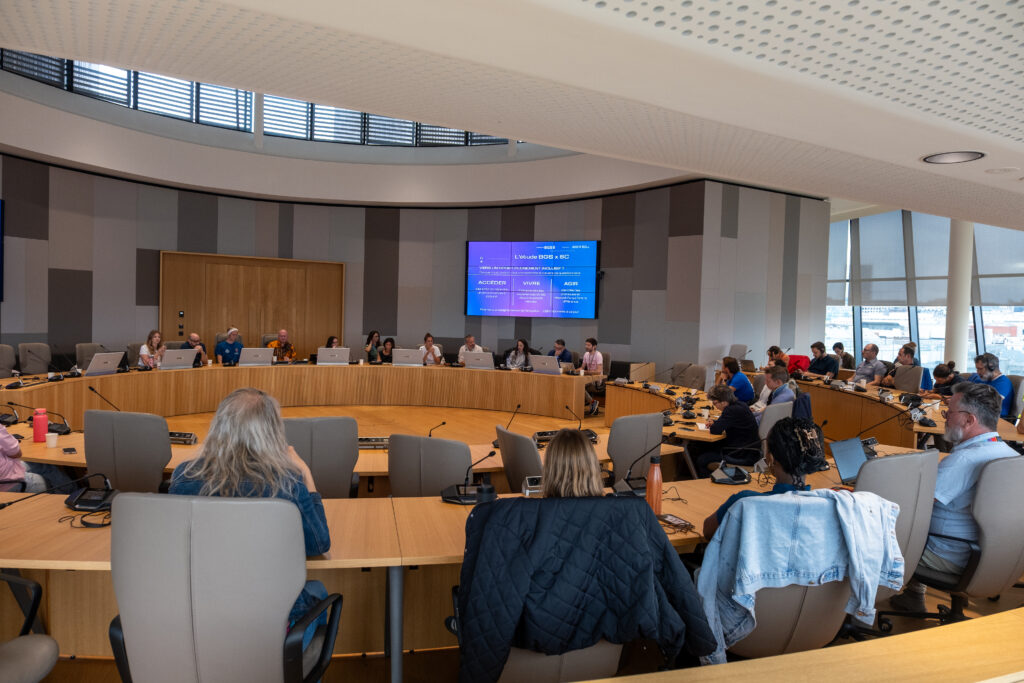
On Friday, August 28, Sport and Citizenship and Brussels Gay Sports organised the conference “How to make sports truly LGBTQIA+ friendly in the Wallonia-Brussels Federation,” as part of a project supported by the Wallonia-Brussels Federation (FWB). Moderated by Jeanne Delval, European Projects Manager at Sport and Citizenship, the event was a wonderful way to launch the 26th edition of the Brussels Games, and an opportunity to highlight the work of committed stakeholders striving to make Belgian sport a space in which everyone can find their place.
The BGS × Sport and Citizenship Partnership
Following an address by Ms Ben Hamou, Deputy Mayor for Culture, Housing, Tourism and Equal Opportunities for the City of Brussels, Damien Frébutte, President of Brussels Gay Sports (BGS), presented the project, outlining its objectives:
- to identify sports organisations and stakeholders committed to ensuring the safety and inclusion of LGBTQIA+ people;
- to publicise best practices and organisations considered ‘safe’;
- to facilitate dialogue between sports organisations and LGBTQIA+ associations;
- to formulate recommendations for developing inclusivity in sporting activities.
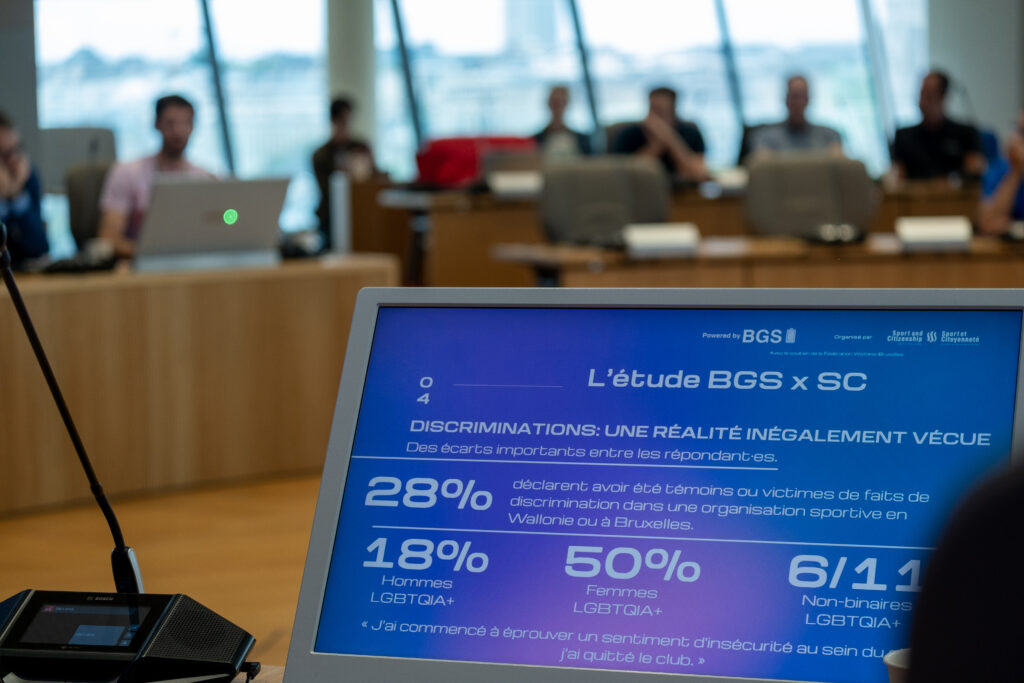
Adrien Panzer, administrator at BGS, then presented the initial findings of this research phase, which aimed to identify inclusive practices within organised sport in the Wallonia-Brussels Federation. The findings show that, out of the 189 responses received to date, inclusivity is still far from being the norm and that discrimination against people with so-called ‘minority’ characteristics persists. Nevertheless, the study highlights good practices, such as mixed-gender activities, thought-out communication, clear listing of resources, reporting mechanisms and training for staff and members. The key lesson is that responsibility for inclusion must lie with the organisations and not with LGBTQIA+ people themselves; and that this responsibility is embodied on a day-to-day basis by key figures such as coaches. If you would like to contribute to this study, you can still complete the questionnaire here.
But what constitutes an LGBTQIA+ ‘inclusive’ sports organisation?
In the first round-table discussion, Raphaëlle Wats, a hockey player with the Lara Hockey Club in Wavre, Victoria Gilles, head of the research and advocacy department at the Fédération Prisme, and Alexandre M. Ansault, vice-president of the Fédération Sportive LGBT+ in France, discussed the concepts of inclusion and inclusivity. Beyond mere communication on the subject or one-off initiatives, inclusion must be an integral part of the club’s culture if its activities are to be truly inclusive. This is not a question of resources, but rather of the priority given to this issue. As a key setting for education and socialisation, the sporting environment is an essential arena for changing attitudes. However, as Raphaëlle Wats pointed out, when this environment is marred by discriminatory practices, participants may find themselves excluded or demotivated, sometimes even to the point of giving up the sport altogether.
Drawing on the study conducted by the Prisme Federation, Victoria Gilles highlighted several best practices to enhance inclusivity in sport, including training for coaches, trainers and managers; the appointment of a designated contact person; and the establishment of clear reporting procedures and sanction mechanisms for anyone – including parents – who contributes to making the sporting environment less safe.
Moreover, Alexandre M. Ansault shared lessons learnt from his experience with the LGBT+ Federation and the Paris International Tournament, which brings together around 3,500 athletes at each edition. In particular, he emphasised the importance of surveying participants during sporting events in order to identify the organisation’s strengths and weaknesses and to improve from one event to the next. He also pointed out that inclusion must be considered beyond the playing field, as moving around in public spaces and interactions with local authorities or the police are also an integral part of the sporting experience.
An example of a committed organisation: Panathlon Wallonia-Brussels
During a keynote speech, Mr Kolë Gjeloshaj, president of the Panathlon Wallonia-Brussels, went on to present his organisation and the activities it carries out to promote fair play in sport and to harness sport as a tool for education and citizenship.
Whilst their activities do not directly focus on the inclusion of LGBTQIA+ people, the Panathlon can serve as a source of inspiration through the ‘turnkey’ solutions they offer to sports organisations. In response to the discussions during the first round-table session, particularly Raphaëlle Wats’s testimony, Mr Gjeloshaj also emphasised the need to connect LGBTQIA+ organisations with international sporting networks and to present a united front in the fight against discrimination.
Once inclusion has been defined: how can we get involved?
With the aim of inspiring the implementation of best practice and raising awareness of the solutions available to sports organisations in the Wallonia-Brussels Federation, the second round-table discussion brought together Marine Poliart, Wallonia manager at Younited Belgium, Benoît Dormal, manager at the Ixelles Hockey Club, and Abigaël Lucas, equality and diversity officer at ADEPS.
Once again, numerous activities already organised by Younited and the Ixelles Hockey Club – which can serve as sources of inspiration for clubs wishing to get involved – were highlighted, such as:
- Mandatory training for coaches, referees and volunteers, and the adoption of a coaches’ charter;
- The possibility for players to join the team of their choice and to turn to trusted individuals within the organisation in the event of abuse;
- The introduction of two ‘third changing rooms’ for people who do not feel comfortable in either the men’s or women’s changing rooms;
- Welcoming an LGBTQIA+ team into the club and making facilities available to them;
- The initiation of discussions with the club’s management about the importance of inclusion and how it is put into practice;
- Partnerships with LGBTQIA+ organisations such as Prisme, the Ihsane Jarfi Foundation or BGS, namely to raise awareness at sporting events.
On behalf of ADEPS, Abigaël Lucas described the supportive role played by the administration as part of a coordinated strategy. From supporting clubs in their initiatives, participating in European projects, delivering training and creating resources for clubs, local sports centres and ADEPS centres, the organisation carries out numerous missions that help to advance this issue in the Wallonia-Brussels Federation (FWB).
What can we take away?
The main lessons from these discussions are as follows:
- Inclusion must be embedded structurally and not limited to isolated actions.
- It is up to the leaders of sports organisations to take ownership of the issue and develop a coherent strategy, in consultation with those concerned.
- Among the many possible approaches, training remains essential. It must involve everyone who is part of the life of the club (management team, coaches, volunteers, participants, spectators, parents, etc.).
- These efforts must allow everyone to feel welcome and to practise the sport of their choice, including at pivotal moments such as adolescence or the end of a professional career.
- In the medium term, the aim is therefore to ensure that LGBTQIA+ identity is no longer a point of discussion within the club, thanks to a proactive approach to inclusivity.
- Inclusivity must be approached from an intersectional perspective, taking into account all forms of discrimination a person may face, as well as how these can reinforce one another.
Sport and Citizenship and Brussels Gay Sports would like to thank all the speakers for their contributions and commitment to making sport in the Wallonia-Brussels Federation a safe and welcoming space, as well as the City of Brussels for hosting the conference, the audience, and the interpreters who made the event accessible to English- and Dutch-speaking attendees.
Photo credits: Didier Reynaud – Quai Solaris – @didou_futura on Instagram – www.quai-solaris.be