Do you know what sport can do to help with the inclusion of displaced persons in Europe?
Get insights from the PLAYER project, including its state-of-the art, and learn more about the role of sport and youth organisations in the inclusion of displaced persons. This article summarises the key milestones of the PLAYER consortium and gathers its productions.
According to a survey published in 2022 on the integration of immigrants in the European Union (EU) by the European Commission, 69% of Europeans see investment in integrating migrants as necessary (1). Sport and youth organisations have a key role to play in this process, as providers of one of the main sociability opportunities. This is from this conviction that the PLAYER project came to be in 2025, with the ambition to develop new tools to raise awareness of displacement and inclusion issues among Latvian and Polish youth.
During the first part of the project, the consortium, made up of Sport and Citizenship (France and Belgium), Kabubu (France), the Riga Football Federation and the Fundacja dla Wolności (Poland), analysed the state of play of the inclusion of Ukrainians in their Polish and Latvian host societies. This stage was essential to understand better the context in which the activities and deliverables of the project would come to be used.
What can you find in the report?
The goal of the document is to support initiatives from sport and youth organisations to include newly arrived persons. To do so, we gathered:
- Main definitions,
- Key data,
- And good practices you can take inspiration from to develop your own project!
You’ll also find specific points on the main challenges for newcomers in their host countries, and information on how they can be specifically experienced by Ukrainians fleeing Russia’s full-scale invasion of their country since 2022.
Who is it for?
The state-of-the-art, like other PLAYER resources is for anyone that is interested in learning more about the realities of displaced people and how to take action to help their inclusion into their host societies.
Training sport and youth stakeholders on migration and inclusion
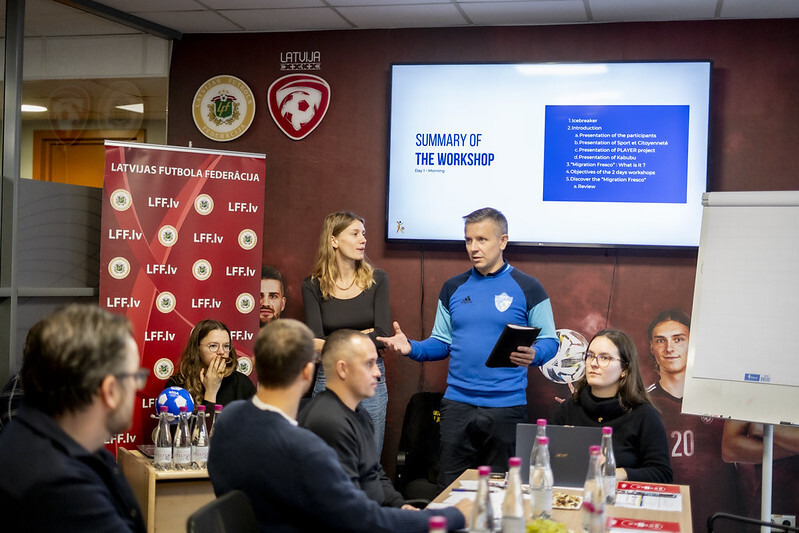
Secondly, a key part of the project consisted in working with sport and youth organisations to raise awareness of the reality of displacement and create tools to tackle inclusion with children. One of these tools is the Migration Fresk, created by Kabubu to address displacement. Based on the concept of the Climate Fresk, this team-based workshop, which is open to both children and adults, enables participants to discover the issues surrounding migration and exile by trying to reconstruct the journey of a person experiencing migration. In Latvia and Poland, Kabubu held two workshops:
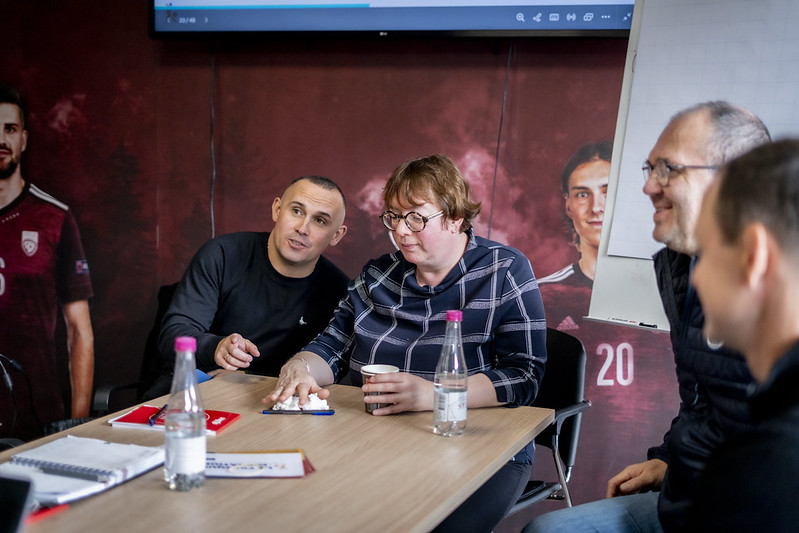
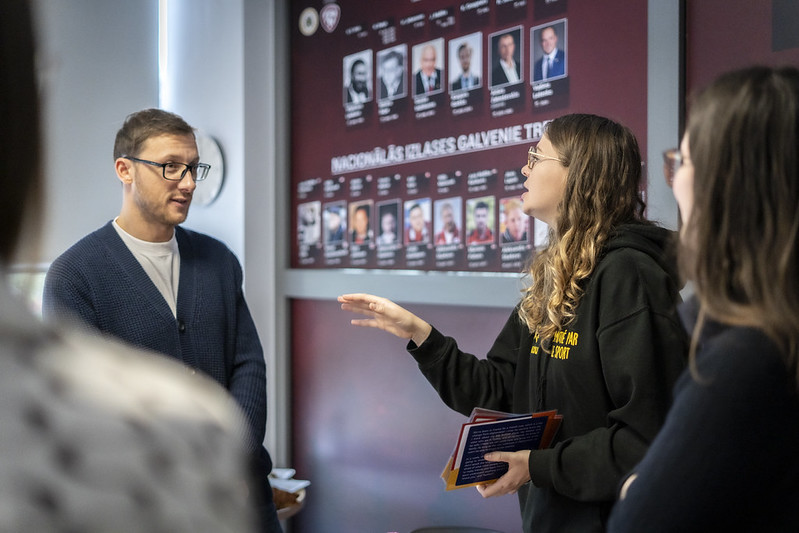
- The first session was to create Migration Fresks, inspired by the French one, that were adapted to Latvian and Polish contexts. This was done with representatives from schools, youth centers, football clubs and federations, as well as local and Ukrainians children, gathered by the Riga Football Federation and the Foundation for Freedom. They were introduced to definitions and key facts around displacement from Ukraine and other countries to the European Union. Then, participants wrote two stories of children displaced by war or unsafe living conditions, inspired by real ones.
- The second session was organised once the Fresks retracing each story written were produced by Kabubu. It consisted in training potential Fresk facilitators, that is to say youth and sport educators that will be able to use the Fresk with their groups, or representatives that can share the tool with their staff.
Now, new facilitators in both Poland and Latvia are in capacity to hold awareness workshops using the Migration Fresk, and talk about displacement, inclusion and EU values with children and young people. To broaden their resources on the topic, Sport and Citizenship and Kabubu created a toolkit gathering data, key figures and pedagogical tools on displacement and EU citizenship. It was designed for sport and youth coaches and educators, to help them organise sessions during which they tackle social subjects such as inclusion. The toolkit can be downloaded as a whole or as sections, to support educators with ready-to-use fact and activity sheets. Its strength lies in the adaptability of the activities to the age of the group, their prior knowledge of the topic, and to different sporting exercises. The toolkit is available in English, Latvian and Polish, and will be shared by implementing partners to their staff and other relevant collaborators.
Other PLAYER resources to help you develop your inclusive project
Soon, the Football and Refugees (FIRE+) MOOC will also be uploaded on an easy-to-use website. It is a comprehensive course built to support sport organisations that want to start inclusive projects or want to learn more about project management, inclusive behaviours, the specificities of refugees that can interact with their access to sport, and more. It is free and will be available in English, French, Polish, Latvian, and Italian.
Keep up with our news to know when it’s ready by subscribing to our newsletter or our social media pages!
(1) European Commission (2022) Standard Eurobarometer 92 – Autumn 2019. Available at: https://europa.eu/eurobarometer/surveys/detail/2276
Download here the PLAYER resources:
The state-of-the-art and collection of good practices on Sport as a Tool for Inclusion. The case of young Ukrainian refugees (in English)
The PLAYER toolkit in English (full version – ice breakers – migration information sheet – quiz around displacement – EU citizenship fact sheet – quiz around EU citizenship – activities)
The PLAYER toolkit in Polish (full version – ice breakers – migration information sheet – quiz around displacement – EU citizenship fact sheet – quiz around EU citizenship – activities)
The PLAYER toolkit in Latvian (full version – ice breakers – migration information sheet – quiz around displacement – EU citizenship fact sheet – quiz around EU citizenship – activities)
Photos © RFF (Riga Football Federation)