Sport for inclusion of displaced people : a look back at the PLAYER project’s final conference
On 12 November 2026, youth and sport organisations, public authorities and young volunteers gathered at the French Football Federation’s (FFF) headquarters in Paris for the final conference of the European project PLAYER. Here is a summary of what was shared.
After a few welcoming words by Thomas Seillé, Head of Social and Environmental Performance at the FFF, Jeanne Delval, European Projects Manager at Sport and Citizenship, PLAYER coordinator and conference moderator, kicked of the event by a presentation of the project. Funded by Erasmus+ Youth, PLAYER brought together Sport and Citizenship, Kabubu in France, the Foundation for Freedom in Poland and the Riga Football Federation in Latvia.
One of the goals of the event was for partners to present the PLAYER tools created to help sports clubs and youth organisations raise awareness of what it means to be displaced and welcome people who have fled Ukraine and other countries (i.e. the toolkit, Migration Fresk, state-of-the-art, and MOOC). Two panel discussions followed. They tried and answered two key questions: how can clubs reach out to displaced people and help them feel welcome? And how can young people get involved in volunteer work on the topic and should stakeholders support this involvement?
Exploring displacement through the Migration Fresk: introduction to the topic and project
What happens when someone has to leave their country? This is both what the PLAYER consortium tried to raise awareness on and what they had to be careful about when designing the project tools. One of them was the Polish and Latvian version of the Migration Fresk, that Kabubu developed to explore the question with young people. Clémentine, project manager at Kabubu, highlighted how a wide range of actors were involved in the cocreation of the Fresks, including people with an experience of displacement, to ensure its relevance. Then she laid out the methodology of the workshop itself.
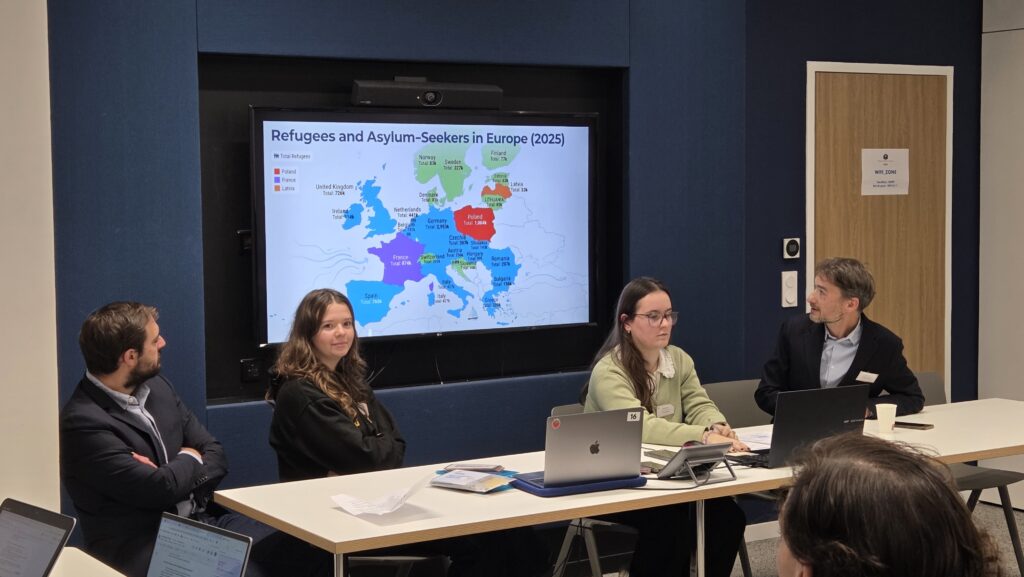
This linked back to the presentation on the topic of displacement in Europe, with a focus on Poland, Latvia and France made by Krzysztof Jarymowicz, co-founder of the Foundation for Freedom. The goal was to establish key definitions (e.g. asylum seeker, refugee, displaced person) and data to set the background of the project. Indeed, the reception people encounter can vary depending on where they arrive, where they come from and the route they have taken. These differences shaped the local versions of the workshop. In Poland, participants follow two stories, one from Somalia and one from Ukraine. In Latvia, the stories trace journeys from Afghanistan and Ukraine. Local teams then trained to lead discussions with children and teenagers and ran workshops at sports festivals.
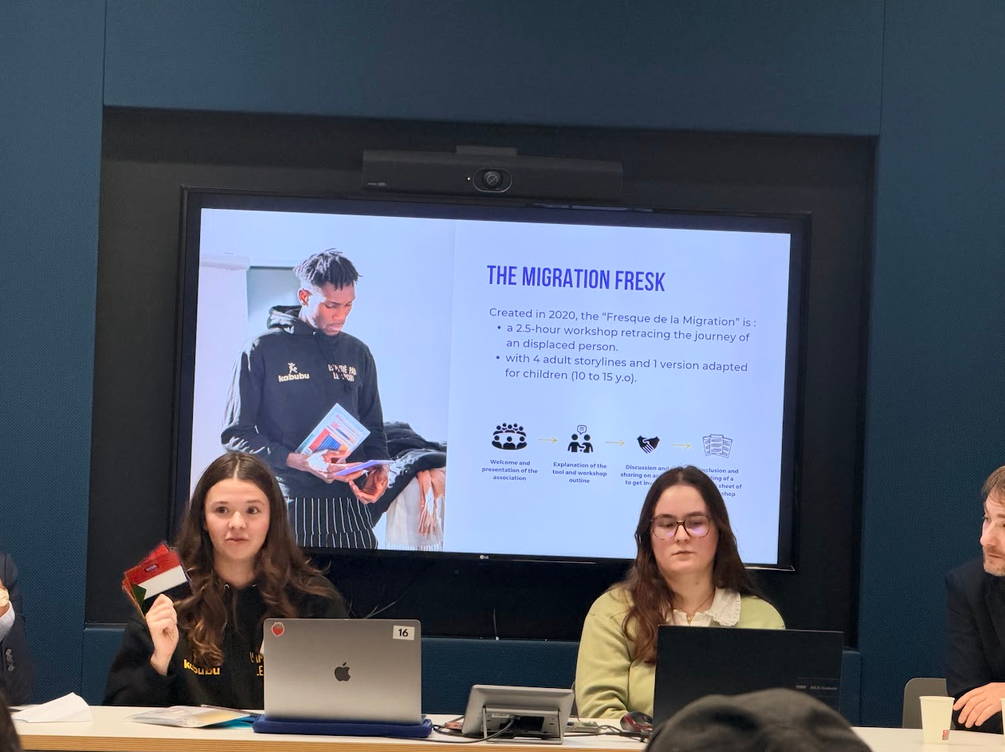
Trained educators can build on the workshop using the Fresk facilitator’s guide and a toolkit that includes cooperative sports games. Clubs looking for more guidance on welcoming refugees can also take the Football Including Refugees (FIRE+) online course in Polish or Latvian, along with French, English and Italian.
First roundtable: Why and how are youth and sport organisations key players in the inclusion of displaced people in their host societies?
During the first panel, Shabnam Salahshoor, a project manager at Kabubu, raised a practical question. How can you join an activity if you have never heard of it or cannot read the language it is advertised in? For Kabubu, the welcome starts before the first session. It means meeting people, asking what they would like to do and listening to their priorities. Some want to practise the local language. Others simply want to play and meet people.
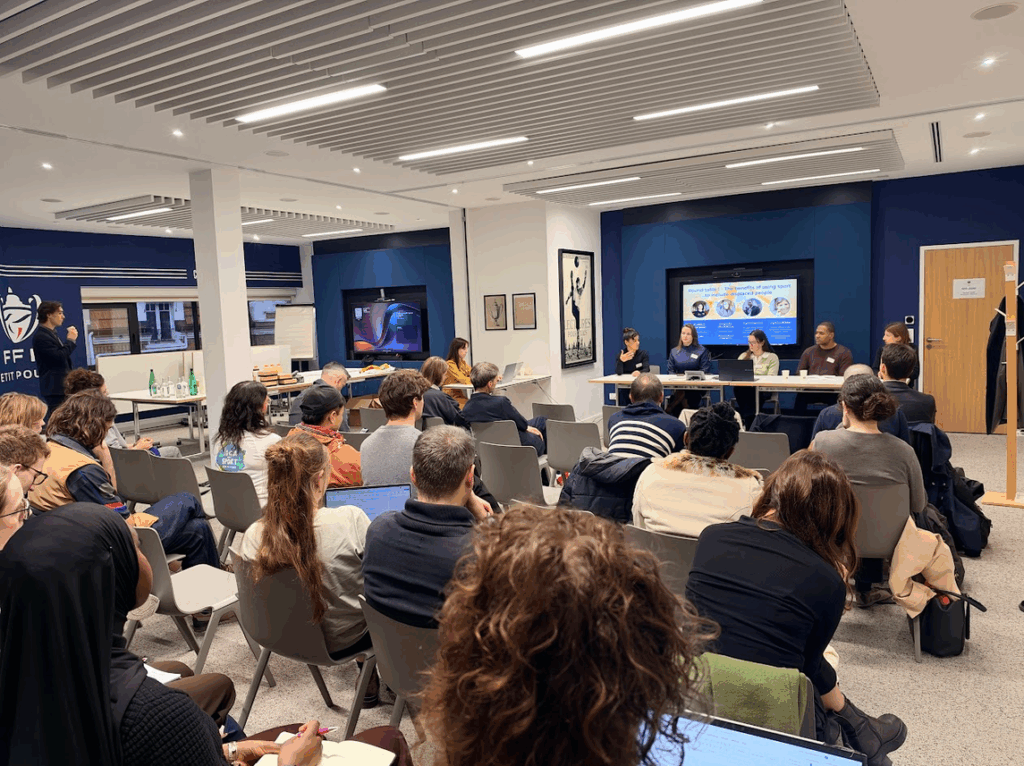
Jevgeņija Obodņikova, Deputy CEO of the Riga Football Federation, described how PLAYER prompted her team to work with local schools and community organisations and helped promote sports clubs as social spaces. Yann Phemius and Agathe Winter, both representatives of the French Ministry of the Interior, presented initiatives that support this potential in France, that are the Volont’R programme and a toolkit that answers clubs’ practical questions on how to register and welcome foreign newcomers.
Volunteering in young people’s own words
The second panel heard from two young people who had volunteered with Unis-Cité as part as the Volont’R programme. Arame Shahin was learning French with Kabubu when the organisation suggested a placement through France’s civic service programme. At first he worried about his French, but the chance to work in sport persuaded him to give it a go. As he took part in activities, his confidence grew. A friend he met during his placement introduced him to the BPJEPS, a French vocational qualification that helped him become a sports instructor after this first experience.
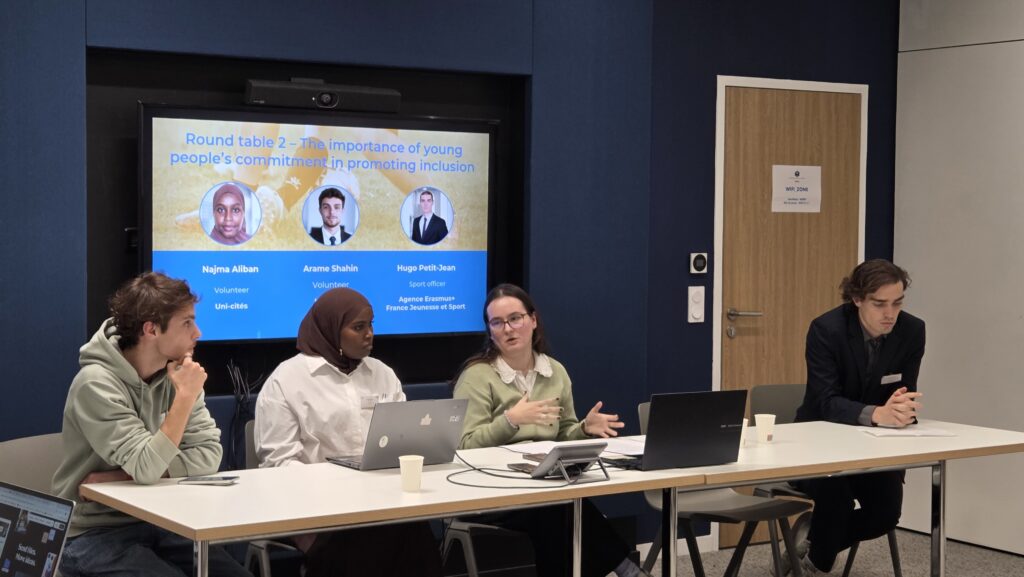
Najma Aliban, now a university student, described what happens when a young French-speaking volunteer and a young refugee work in pairs. Doing something together gives you a chance to get to know each other, even when you are still finding the confidence to speak. She also spoke about what can hold people back from volunteering. Some lack time or information. Others worry that, without previous experience, they will have little to contribute.
Hugo Petit-Jean, sport officer at the the French Erasmus+ Youth and Sport Agency, encouraged organisations to involve young people in designing projects from the outset so they have a say in the activities they take part in. More resources on subventions and how to design impactful initiatives can be found on the Agency website or through getting in contact with its agents.
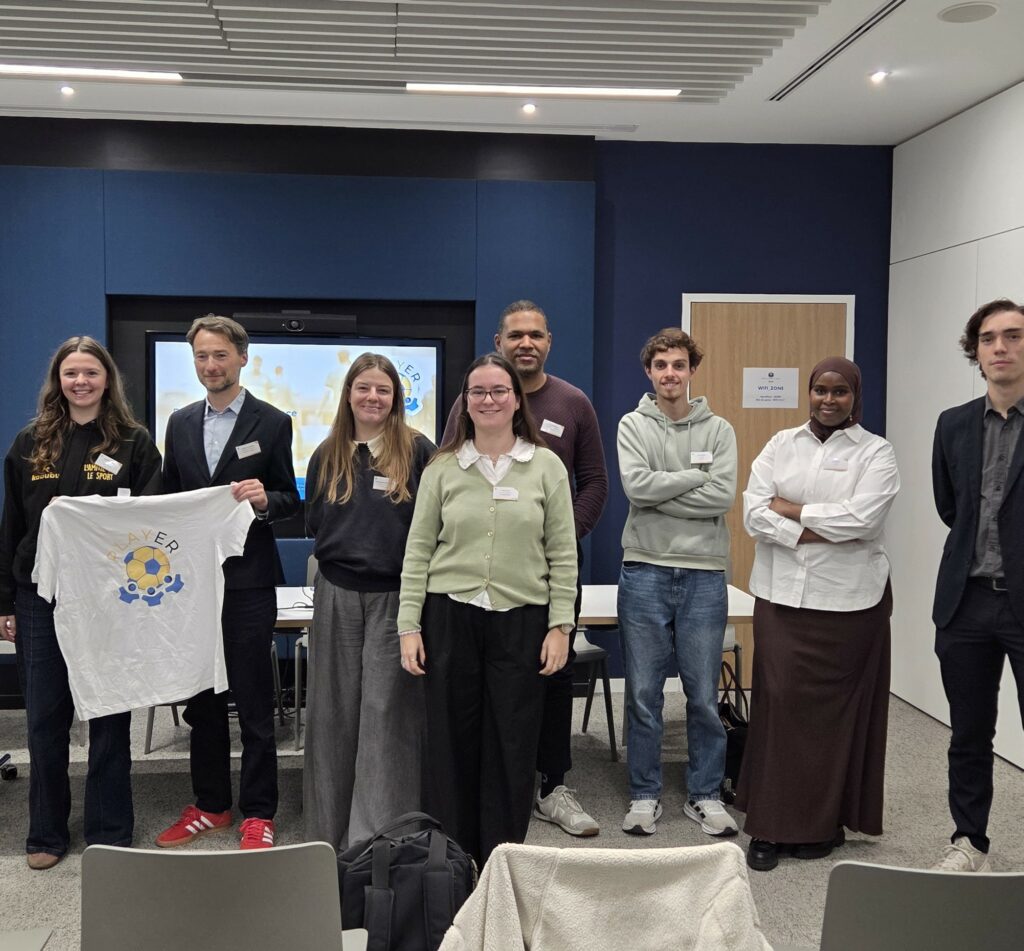
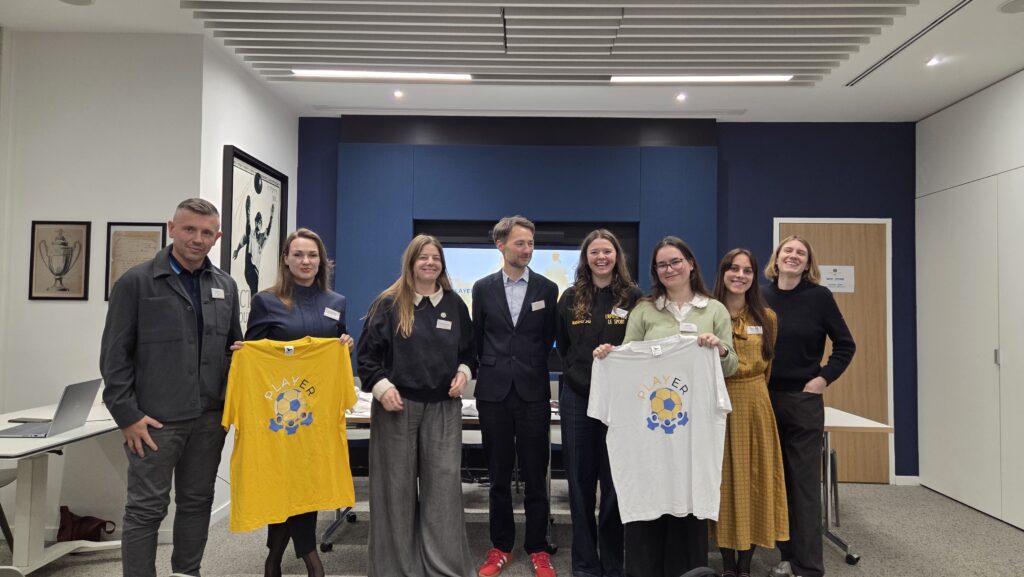
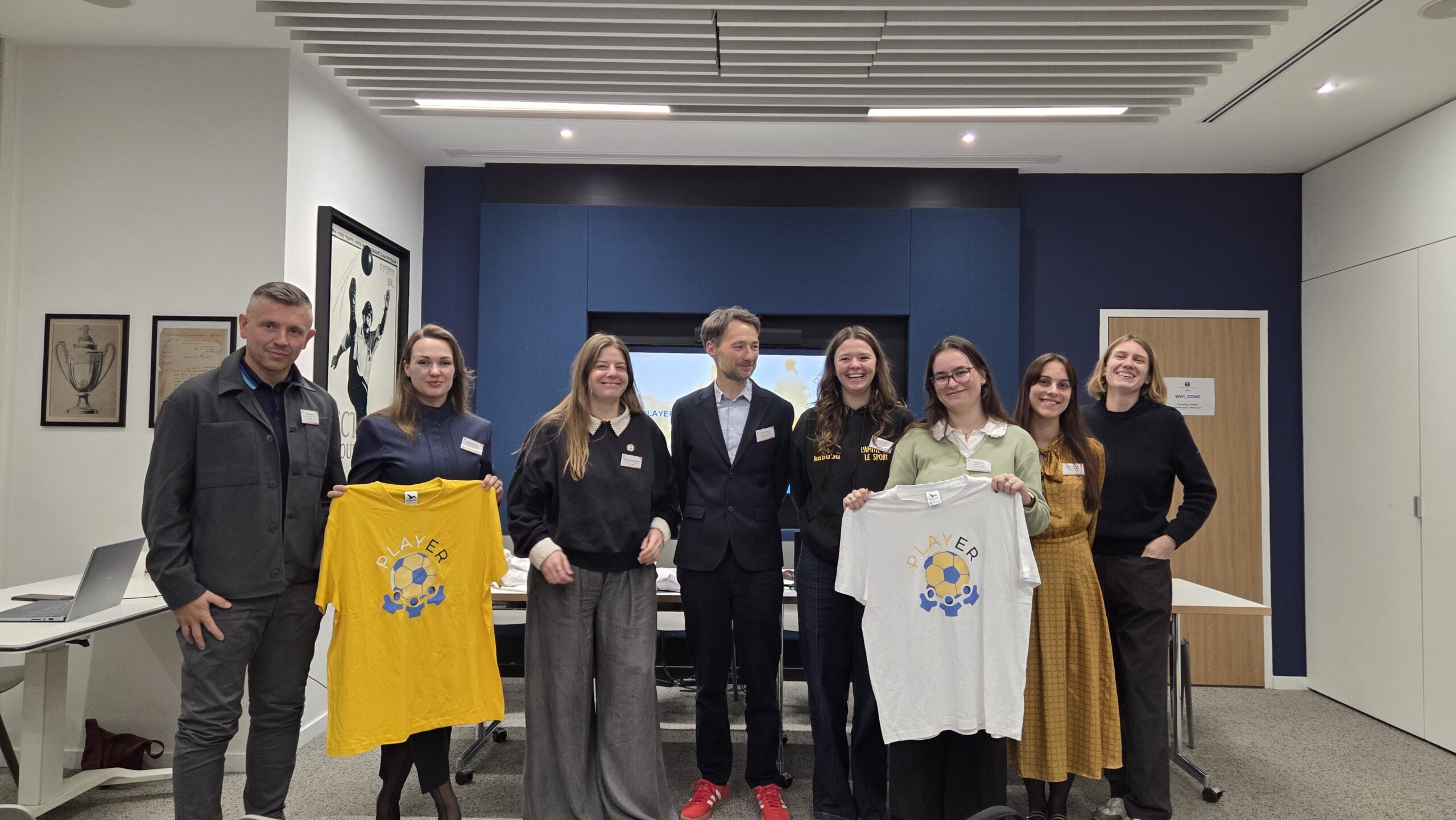
Some of the conference speakers and partners
So, now what? Use the PLAYER tools in your community
Do you run a sports club, a community organisation or a youth group? Explore the PLAYER resources and try the Migration Fresk or a cooperative game to start a conversation with your group. Please follow us on our social media for news of PLAYER’s upcoming advocacy paper!