Throwback on the Irish Presidency’s conference on Traditional Sports and Games
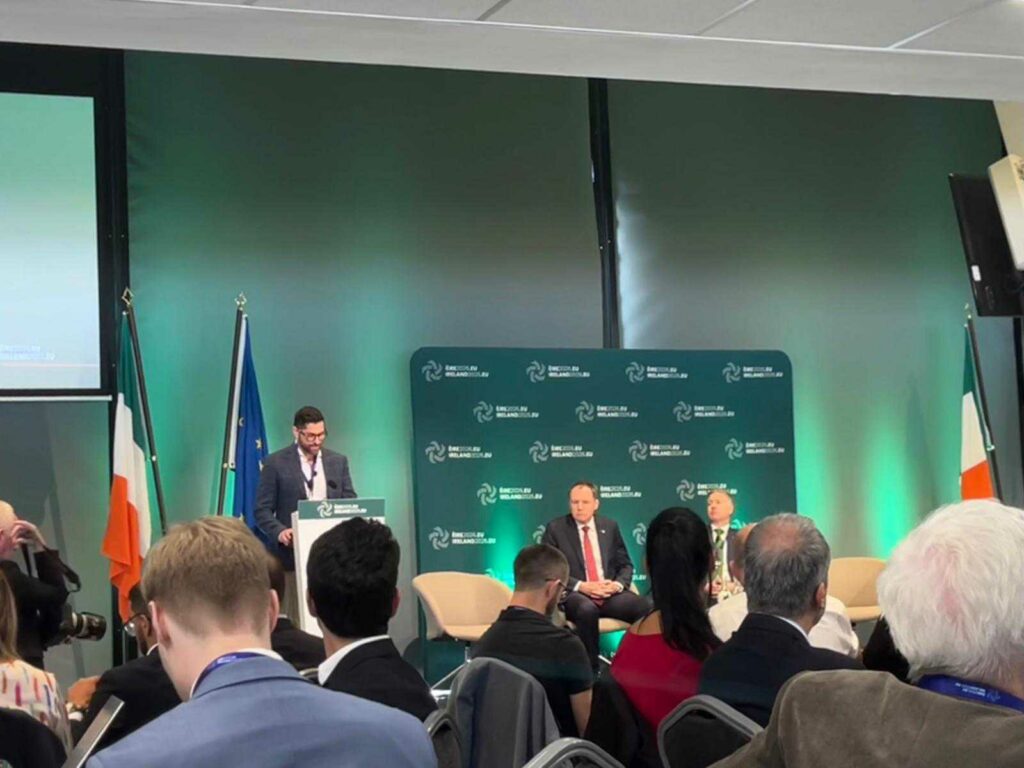
On the 22nd of September, on the eve of the European Week of Sport, the Irish presidency of the Council of the EU hosted a conference on Traditional Sports and Games (TSGs). Held in Ireland’s most famous sporting venue, Croke Park, the conference gathered stakeholders from Ireland but also from all over the EU to discuss the presidency’s flagship topic, which will result in related conclusions.
Opening Remarks: Identity and Community Through Sport
In their opening statements, Charlie McConalogue, Irish Minister of State with responsibility for Sport and Postal Services, and Shane Flanagan, Director of Coaching and Games Development at the GAA, highlighted the unique nature of TSGs as a way to help us connect back to our roots. In doing so, they inevitably tie us to our history and our identity, and it is the very richness of these identities that connects us as Europeans.
Beyond these cultural ties, the speakers also highlighted the social benefits that stem from practicing these sports: bringing people together, giving them a sense of belonging, and strengthening local communities. Finally, Flanagan highlighted the significant returns on investment that sport generates, through direct economic revenues but also through its impact on society, health and well-being. These benefits are not specific to TSGs, although TSGs do demonstrate their own specificities, but are replicable in every country and through every sport. This is a manifesto that sits at the centre of our actions at Sport and Citizenship.
Panel Discussion: Traditional Sports and Games Across Europe
In a first panel, Paul McDermott, Director of High Performance and National Governing Bodies at Sport Ireland, Jacqueline Kronenburg, Vice President for Europe of TAFISA, and Chris Collins, Head of Operations for Gaelic Games Europe, exchanged views on the place and potential of TSGs across Europe.
In their conversation, they highlighted a unique opportunity linked to developing TSGs across Europe: helping those who live abroad find a sense of community and home, while also bolstering European identity by giving other Europeans the chance to experience different cultures.
The development of TSGs across Europe, and the Erasmus+ projects that support it, was also underscored as a great way to share culture, knowledge and experience alike.
Panel Discussion: Social Inclusion and Disability in Sport
In a discussion on social inclusion and disability, Brenda O’Donnell, CEO of Active Disability Ireland, Ger McTavish, Disability in Sport Lead at Sport Ireland, and Neasa Russell, Chief Operations Officer at Paralympics Ireland, exchanged views on the ways in which each of their organisations seeks to promote inclusion.
While events such as the Paralympic Games are key to building momentum, they require, above all, adequate resources (human, infrastructural and voluntary) to be effective. The speakers called on policymakers to embed inclusive approaches and terminology across all their policies, and to make these as actionable as possible. Finally, they highlighted the fact that they work together in designing their strategies, which allows them to be not only more effective, but also better able to identify areas for innovation.
Keynote Address: Sport Diplomacy and Investment in Sport
In a keynote address, the Minister for Arts, Media, Communications, Culture and Sport, Patrick O’Donovan, used the opportunity of this transnational conference to underscore the growing importance of sport diplomacy, a discipline that, given the current geopolitical situation, can prove most useful.
He also stressed the importance of investing in sport, even when the returns take time to materialise. This is especially true in light of the rise of sedentary lifestyles and the threat posed by mindless scrolling, to which the solution lies in investing in sport and culture.
“Sport is a great eye opener and a great door opener”
New Statistics on Sport and Physical Activity
Following the keynote, Sarah Lynch, Deputy Director of the Sport Unit at the European Commission, took the stage to present the findings of the new Eurobarometer on sport and physical activity. The figures show that Europeans are, on the whole, doing more sport, up from 55% in 2022 to 61% in 2026, yet the level of inactivity remains alarmingly high at 39%. Those who exercise do so not only for their physical health but also for their mental health, while those who do not cite a lack of time as the main barrier. Finally, 84% of respondents agree on the need to see more women in sport. All these findings will help guide our action and future work.
Panel Discussion: Demographic Change and Sport
Finally, a panel discussion bringing together Dr. Peter Horgan, one of the authors of the GAA Demographics Report, Benny Cullen, Director of Research and Evaluation at Sport Ireland, and Andrea Gallelli from Eurostat, focused on Europe’s changing demographics.
The speakers flagged that an ageing population will place growing weight on the health sector, and that it also poses a risk to volunteering, which is so often linked to parenting. They stressed, once again, the need to engage the 16-to-29 age group, the most affected by sedentary lifestyles linked to screen time, in sport: investing in this generation now means they are more likely to stay active throughout their lives, making it the investment with the greatest long-term return. The panel also highlighted the importance of using sport as a tool for the inclusion of immigrants, an approach that sits at the core of our work, notably through the ongoing Project PLAYER, funded by Erasmus+.
Key takeaways
- Traditional Sports and Games are more than a cultural legacy: they are a living tool for building European identity, connecting diaspora communities, and encouraging cultural exchange through initiatives such as Erasmus+.
- Inclusion depends on sustained resources and on embedding inclusive language and practice into policy from the outset, not as an afterthought.
- Sport diplomacy is emerging as a genuine policy tool, and one that carries added weight in the current geopolitical context.
- The new Eurobarometer confirms a positive trend in sport participation, but with over a third of Europeans still inactive, and a persistent gender gap in visibility, more sustained investment is needed.
- Europe’s ageing population and changing demographics call for a shift in focus toward younger age groups (16-29), where early investment in sport delivers the strongest long-term returns, while also safeguarding the future of volunteering.
- Across every panel, the return on investment in sport, be it economic, social and health-related was strongly enphasised, but it requires patience and sustained political commitment to materialise.