From Vision to Action: Key Takeaways from Our Active Cities Conference
By Solyane Michaut, European Affairs Officer
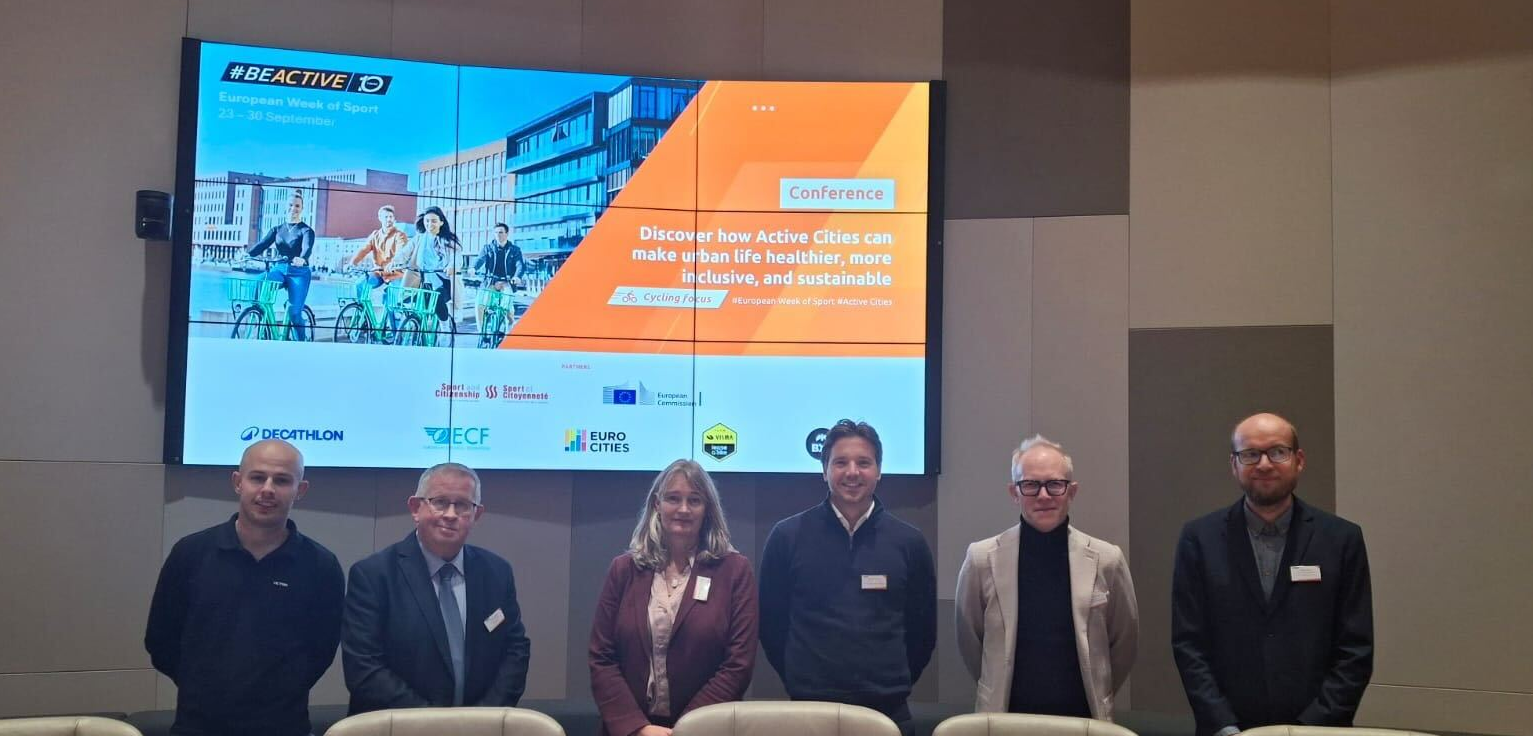
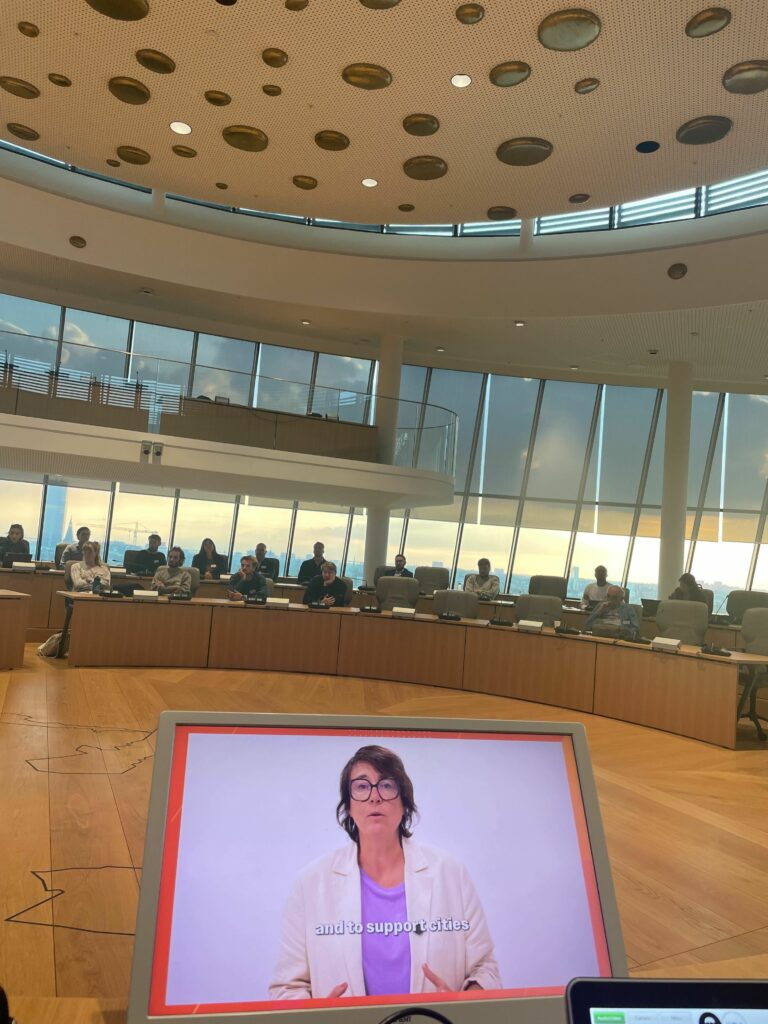
On Tuesday, September 30th, to conclude the 10th edition of the European Week of Sport, Sport and Citizenship organised in Brussels a conference on the topic of Active Cities. Following an opening statement from Florence Frelinx, Brussels’ first Alderwoman of Public Patrimony, Sports, Green Spaces & Animal Welfare, a diverse panel of experts moderated by the Secretary General of Sport and Citizenship Jean-Louis Erneux brought together Fabian Küster (Director Advocacy & EU Affairs, European Cyclists’ Federation), Herman Van Beveren (E-Bike Rental Accelerator Coordinator, Decathlon), Sven van der Lugt (Head of Partnerships & New Business, Team Visma), Erlijn Mulder (EU Representative for the City of Utrecht, Eurocities), and Tim Celen (Belgian paracyclist, 5-time World Champion and 3-time Paralympic medallist). This discussion was accompanied by a video intervention of MEP Diana Riba I Giner. They explored the pathways toward making European cities more cyclable, liveable for all and healthier.
Building Active Cities: A Holistic Vision for Urban Life
Active Cities are gaining momentum in Europe. By providing a supportive urban environment, Active Cities help fight sedentary lifestyles, enabling citizens to integrate physical activity into their daily lives. This vision rests on a multimodal approach that involves cycling, walking and efficient public transports. Cities such as Amsterdam and Utrecht can serve as blueprints of good practices. As highlighted by Erlijn Mulder, Active Cities involve an ongoing process of redesigning the cities, from improving infrastructures to adding green spaces and optimising space-sharing among different road users. The transition towards Active Cities is not straightforward and requires genuine citizen engagement, political courage and to embed active mobility into daily life.
Active Cities are not just a trend but the future of urban living
The panellists then went on to discuss the many benefits of Active Cities. Fabian Küster noted that cycling, a key element to the transition to Active Cities, generates €150 billion in benefits per year across the EU. This includes extensive positive externalities in environmental sustainability, public health and mobility. Indeed, Active cities, “by encouraging non-motorised means of transport and the creation of green spaces, create a symbiosis between urban life and nature” as Herman Van Beveren emphasised. Regarding public health, fostering physical activity undeniably reduces health problems, but it also greatly supports people’s mental health. Finally, Active Cities are also a great way to foster social inclusion. As Erlijn Mulder put it, “Active Cities are also social cities,” in that they can bring people together, create a sense of cohesiveness and even amongst road users, enable people to see and acknowledge one another’s presence. Given all their benefits, there is a consensus that Active Cities are not just a trend but the future of urban living.
Challenges and Solutions: Navigating the Road Ahead
The panel discussion and the Q&A session afterwards brought up the challenges and the way forward for active cities. One of the key challenges is the capability-expectation gap that pertains with regards to the transition towards active cities. Many cities and policies want to promote active mobility but lack the infrastructure and the practical implementations that would enable this transition. Another challenge is that of accessibility, both physical and financial. Indeed, this transition ought to be mindful of the needs of all citizens and adapt accordingly. Finally, such transition requires willingness from all involved parties and especially the citizens. It needs to be at the right time and done in a way that does not lead to a culture war.
As highlighted by Sven van der Lugt and Tim Celen, a key way to motivate people and ignite behavioural change is through the involvement of athletes and sports teams. With their platforms, they have privileged access to inspire change. Tim Celen expressed this aspiration clearly: “As athletes of the Paralympic team, I hope we can be role models, we can inspire young people to start cycling.” A more practical enabler that directly addresses financial accessibility is the introduction of leasing schemes, as promoted by Herman Van Beveren. Other levers include the European Commission’s policy proposal on clean corporate fleets[1] and the introduction of kilometre allowances. Finally, a key lesson from Erlijn Mulder’s experience is to start small and then scale up, ensuring that ambition is met with willingness and adequate infrastructure.
This conference reaffirmed a core belief of Sport and Citizenship: that physical activity and sport are fundamental tools for building healthier, more inclusive, and sustainable communities. As the European Commission advances policies on cycling infrastructure and sustainable mobility, our work has never been more relevant. Through EU-funded projects like PACTE+, we worked directly with cities and stakeholders to turn policy ambitions into practical action, supporting the transition towards Active Cities across Europe. We remain committed to facilitating critical dialogue and delivering solutions that make active living accessible to all citizens.
[1] https://transport.ec.europa.eu/document/download/1498648c-63fc-4715-975d-ccbc64703da5_en?filename=Communication%20-%20Decarbonising%20corporate%20fleets.pdf